
Can Security Cameras Help Reduce Theft in Retail Stores?
A Practical Security Guide for Melbourne Retail Businesses
Retail theft is a concern for businesses of all sizes. For a small retailer, even relatively minor losses can add up over time. But theft isn't limited to products disappearing from shelves. Retail businesses may also need to consider cash handling, stockroom access, after-hours entry, delivery areas and disputes at the point of sale.
This leads to an important question: Can security cameras actually help reduce theft - or do they simply record what has already happened?
A well-designed CCTV system can do much more than provide footage after an incident. When cameras are positioned correctly and form part of a broader security strategy, they can help deter unwanted behaviour, improve visibility and provide useful information when something goes wrong.
At Austrend, we design and install security solutions for Melbourne homes and businesses. Here are some of the most important considerations for retailers planning a CCTV system.
1. CCTV Can Act as a Visible Deterrent
One of the simplest benefits of security cameras is visibility. When customers and visitors can clearly see that a store is monitored, the presence of cameras may discourage some opportunistic behaviour.
But camera visibility needs to be balanced with effective positioning. A camera shouldn't be installed simply to be seen - it also needs to capture useful footage. For many retail environments, this means combining visible cameras in customer areas with carefully positioned cameras covering critical locations.
2. Protect the Entrance First
The entrance is one of the most valuable camera positions in a retail store because almost everyone entering or leaving the business passes through it.
A properly positioned entrance camera can provide a clearer view of people entering and leaving, clothing and appearance, activity around the doorway, and after-hours access.
One common mistake is relying only on a wide-angle camera mounted deep inside the store. That may show what happened, but not necessarily provide the detail required to identify who was involved.
3. Point-of-Sale Areas Need Special Attention
For many retail businesses, the checkout is one of the most sensitive areas. A camera positioned around the point of sale can help review customer disputes, cash-handling incidents, suspicious transactions, refund-related incidents and activity around the counter.
The objective should not simply be to point a camera directly at the register. Good CCTV design considers the overall scene so that an incident can be understood in context.
4. Don't Forget the Stockroom
Retail security often focuses almost entirely on customers, but valuable stock may spend much of its time away from the shop floor.
Stockrooms, rear storage areas and delivery zones can therefore be just as important as public areas. Depending on the business, CCTV can help provide visibility over deliveries, stock movement, restricted areas, rear entrances and after-hours activity.
For businesses carrying expensive or easily portable products, these areas may deserve particularly careful coverage.
5. Camera Placement Matters More Than Camera Count
A store with twelve poorly positioned cameras may still have significant blind spots. Meanwhile, a carefully planned system with fewer cameras may provide much more useful coverage.
Before installation, consider what each camera is supposed to achieve:
Camera 1 - Identify people entering
Camera 2 - Monitor checkout
Camera 3 - Cover the main retail floor
Camera 4 - Protect stockroom
Camera 5 - Monitor rear entrance
Camera 6 - Cover external frontage
Every camera should have a purpose.
6. Image Quality Matters When an Incident Happens
A security camera can look impressive on a specification sheet, but what really matters is whether the recorded footage is useful.
Important factors include resolution, viewing angle, distance from the subject, lighting, night-time performance and camera positioning.
For example, a very wide camera may capture an entire store but provide limited facial detail at the far end of the room. Sometimes the best solution is not a wider view, but an additional camera positioned specifically to capture identification-level detail.
7. Local Recording Can Be Valuable for Retail Businesses
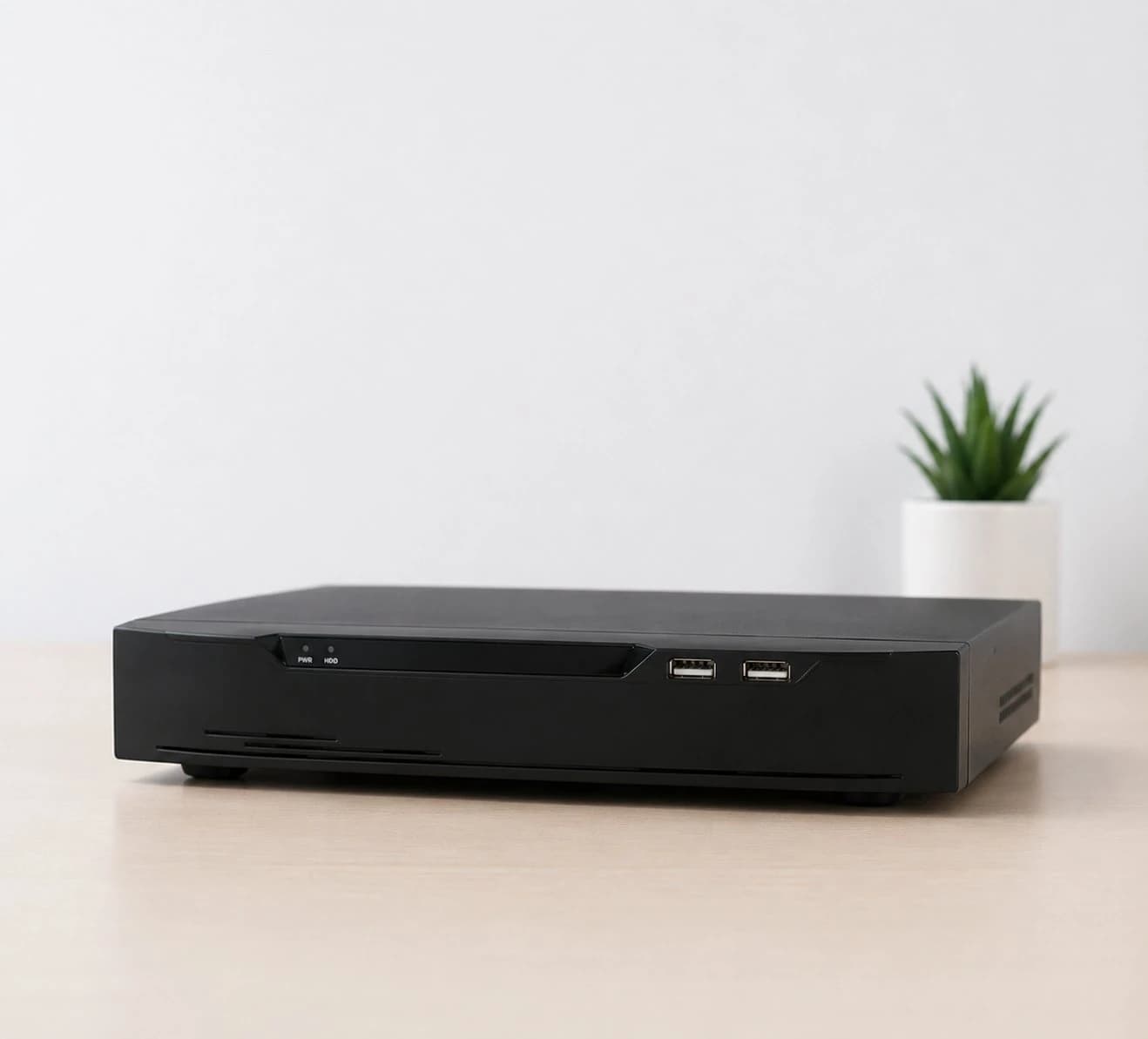
Many modern consumer cameras rely heavily on cloud storage. For commercial environments, an NVR-based CCTV system with local storage can offer practical advantages, including continuous recording, centralised footage, fast playback, greater control over recordings and no mandatory monthly cloud storage subscription.
The appropriate storage capacity depends on the number of cameras, video resolution, recording settings and required retention period. This should be considered during system design rather than after installation.
8. Remote Monitoring Gives Owners Greater Visibility
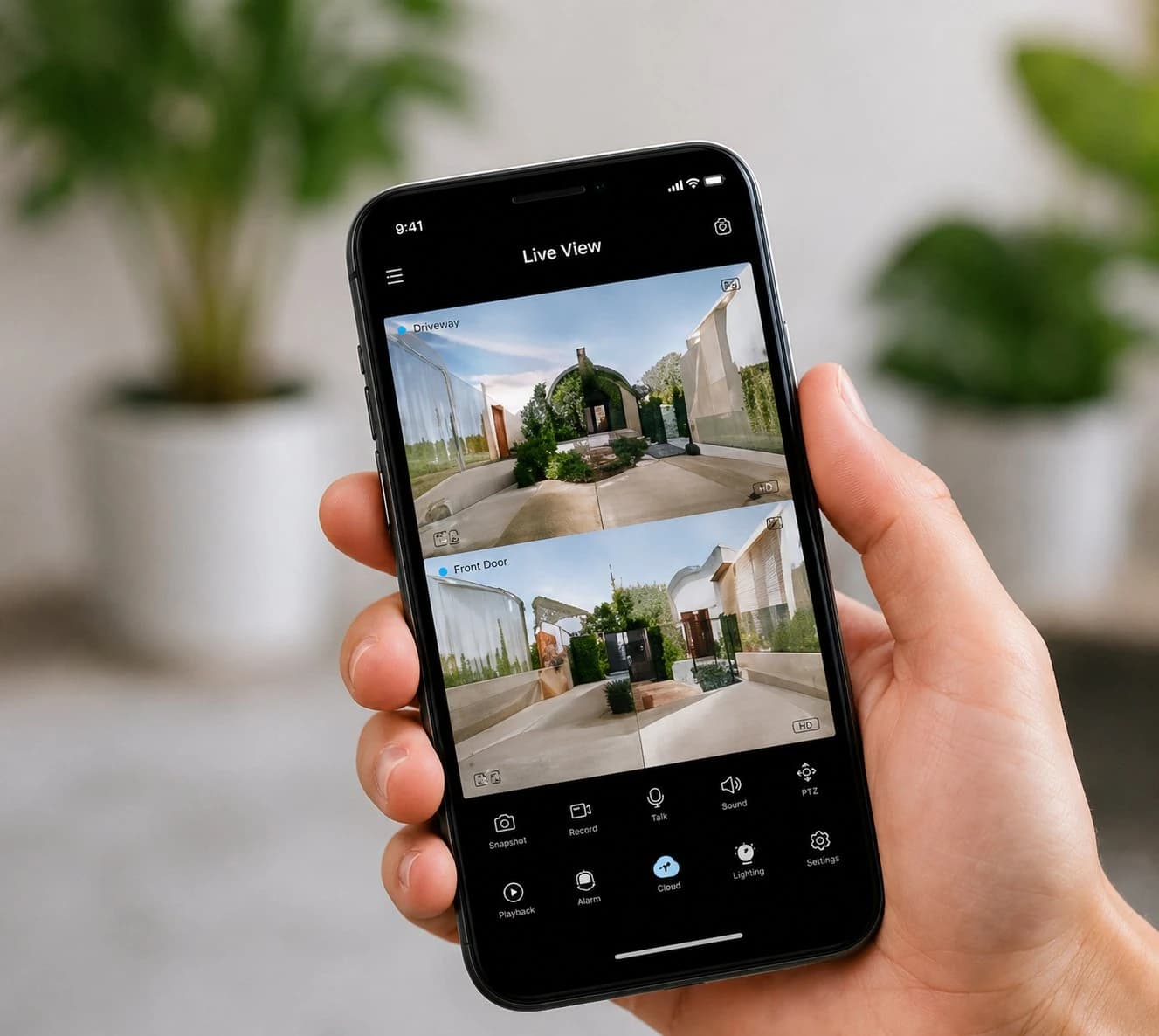
Small business owners can't be at their premises all the time. Modern CCTV systems can allow authorised users to securely view live or recorded footage remotely.
This can be useful when you're away from the store, an alarm is triggered, staff report an incident, you want to check whether the premises have closed correctly, or you're managing more than one location.
Remote access shouldn't replace good on-site procedures, but it can give business owners another useful layer of visibility.
9. CCTV Is Most Effective as Part of a Wider Security Strategy
Security cameras shouldn't be treated as the entire security solution. Depending on the premises, effective retail security may also involve good lighting, secure doors and locks, access control, alarm systems, appropriate staff procedures, door and window sensors, and secure stock storage.
The strongest security systems use multiple layers. For example: Door sensor detects unexpected entry -> Camera records the area -> Owner receives an alert -> Recorded footage is available for review.
This is much more useful than having several independent devices that don't work together.
What Areas Should Retail CCTV Cover?
| Area | Main Purpose |
|---|---|
| Main Entrance | Identify people entering and leaving |
| Checkout / POS | Review transactions and incidents |
| Retail Floor | Monitor general activity |
| High-Value Displays | Protect valuable merchandise |
| Stockroom | Monitor stock and restricted access |
| Rear Entrance | Protect staff and delivery access |
| External Frontage | Monitor activity outside the store |
The exact design should always depend on the individual premises.
Privacy Matters
CCTV in a commercial environment needs to be used responsibly. Businesses should carefully consider where cameras are installed, what areas they capture, who can access recordings, how footage is stored and how long recordings are retained.
Some areas should never be monitored inappropriately. Businesses should ensure their CCTV use complies with the laws and privacy requirements applicable to their circumstances and seek professional advice where necessary.
Professional Retail CCTV Installation in Melbourne
Every retail environment is different. A small boutique has very different security requirements from a supermarket, showroom or electronics store.
Austrend can assess factors such as store layout, entrances and exits, checkout location, high-value merchandise, storage areas, lighting, existing network infrastructure and remote access requirements.
From there, we can design a CCTV system around the way the business actually operates. Our commercial security solutions can include:
Professional security cameras
NVR recording
Local video storage
Remote monitoring
Professional cabling
System configuration
Security and smart access integration
Ongoing local support
Build a Smarter Security System for Your Business
Retail security isn't simply about installing cameras. It's about understanding where incidents are most likely to occur and designing the system so that useful information is captured when it matters.
From entrances and checkout areas to stockrooms and rear access, every camera should have a clear purpose.
At Austrend, we help Melbourne businesses design practical security solutions that combine professional CCTV, reliable recording and smart security technologies.
Talk to Austrend about a security solution designed around your business.
Frequently asked questions
Can CCTV prevent shoplifting?
CCTV cannot guarantee that theft will never occur. However, visible cameras can contribute to deterrence, while recorded footage can help businesses understand and review incidents.
Where should cameras be installed in a shop?
Common priority areas include entrances, checkout areas, the main retail floor, high-value displays, stockrooms and rear access points.
Should retail CCTV record continuously?
Continuous recording is often useful in commercial environments because incidents may not always trigger motion detection in the way expected. The appropriate recording method depends on the business and storage requirements.
Can I watch my shop cameras from home?
Many modern CCTV systems support secure remote viewing when correctly configured.
Do I need cloud storage?
Not necessarily. An NVR system can store footage locally, avoiding mandatory cloud-storage subscriptions.
Tags
- Retail Security
- CCTV
- Loss Prevention
- Business Security