
Smart Door Locks vs Traditional Locks
Smart Door Locks vs Traditional Locks: Which Is Better for Australian Homes?
Key takeaways
- Smart locks win on convenience, temporary access and access records.
- Battery anxiety is largely solved — low-battery alerts, emergency power and a backup key.
- Installation quality matters more than features: a badly fitted smart lock is less secure than a well-fitted traditional one.
- Not every Australian door suits every lock — check thickness, backset and frame clearance before buying online.
For generations, the traditional key has been the standard way to secure our homes. But today, more Australian homeowners are replacing — or complementing — their traditional locks with smart door locks.
Fingerprint access, PIN codes, mobile apps and temporary access codes can make entering your home easier while giving you much greater control over who can access your property.
But are smart locks actually better than traditional locks? And, more importantly, are they secure enough for your home?
At Austrend Home, we provide smart security and home automation solutions for Melbourne homes. In this guide, we'll explain the key differences between smart and traditional locks and help you decide which option is right for your property.
What Is a Smart Door Lock?
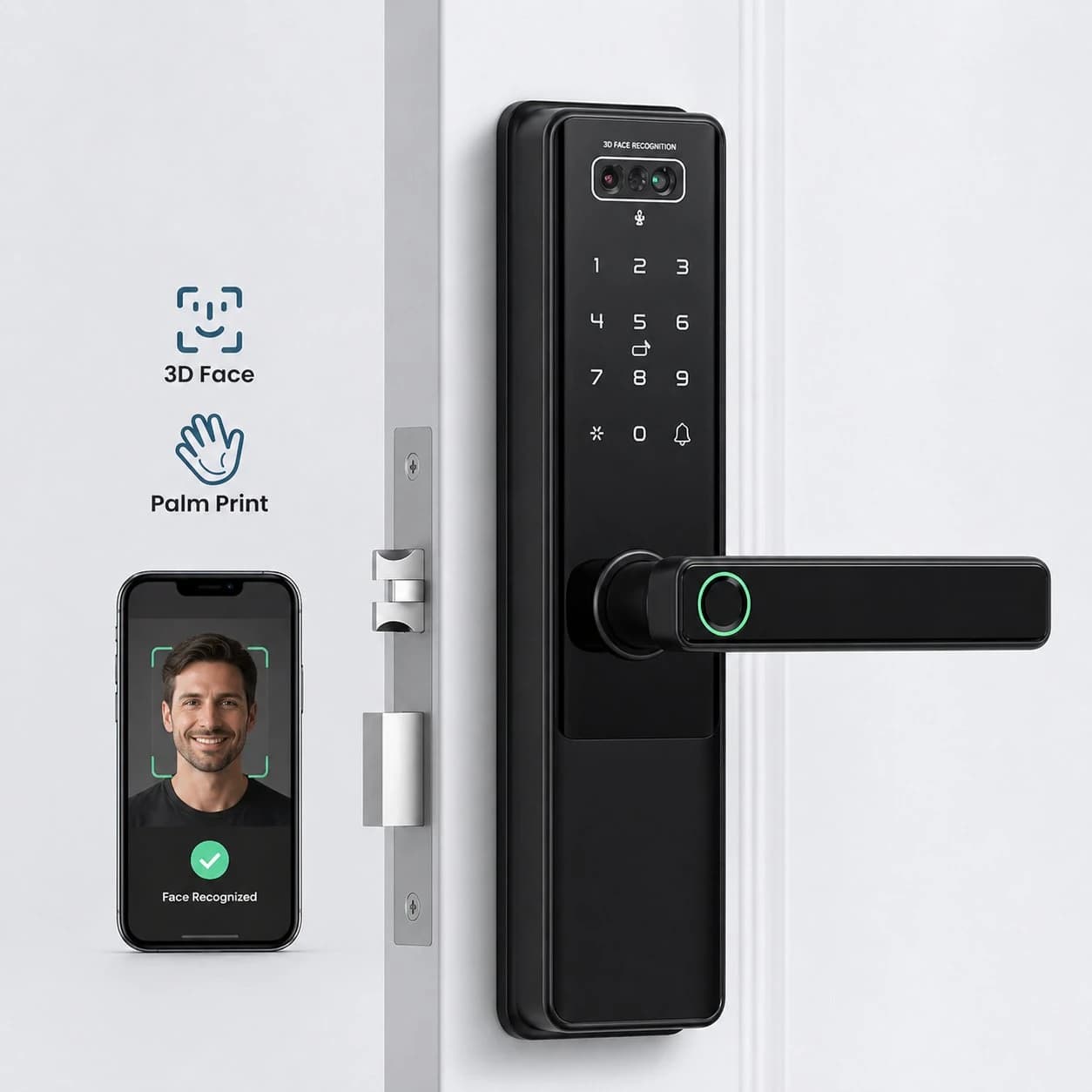
A smart door lock is an electronic locking system that allows you to unlock your door without relying solely on a traditional key. Depending on the model, you may be able to enter your home using:
- Fingerprint recognition
- PIN code
- Mobile app
- Access card
- Temporary access code
- Traditional backup key
This means you no longer need to carry a key every time you leave home. But convenience is only part of the benefit. Modern smart locks can also give homeowners much greater control over who can enter the property and when.
1. Convenience
This is probably the biggest difference between smart and traditional locks. With a traditional lock, you need a physical key. That sounds simple — until you forget your keys, lose them, lock yourself out, need to give someone access while you're away, or need several copies for family members.
A smart lock removes many of these problems. You can simply use your fingerprint or PIN to enter your home. For families with children, this can be particularly useful because children don't need to remember to carry a house key every day.
2. Giving Temporary Access
Imagine you're at work and a cleaner, tradesperson or family member needs access to your home. With a traditional lock, you may need to give them a spare key, hide a key somewhere outside, or be at home to let them in.
With many smart locks, you can create a temporary PIN code instead. For example, you could create a code that works only on Tuesday between 10:00 am and 12:00 pm. Once that period expires, the code can no longer be used. This gives homeowners much greater control over temporary access.
3. Knowing Who Entered Your Home
Traditional locks cannot tell you when someone has opened the door. Many smart locks can. Depending on the system, you may be able to view access records through your smartphone.
For example: 3:42 pm — Front Door Unlocked. This can be useful for families who want to know when children arrive home from school or when a cleaner or contractor has entered the property.
4. What Happens If the Battery Runs Out?
This is one of the most common concerns we hear from customers: what happens if the smart lock battery dies?
Modern smart locks are designed with this situation in mind. Most provide low-battery warnings well before the battery is completely depleted. Depending on the model, backup options may also include emergency external power, a mechanical backup key, and low-battery notifications.
The important thing is choosing a quality lock and having it installed correctly.
5. Are Smart Door Locks Secure?
A good smart lock should not be judged only by its electronic features. The physical construction of the lock and the door itself remain extremely important.
When choosing a smart lock, homeowners should consider:
- Lock construction
- Door compatibility
- Installation quality
- Emergency access
- Software security
- Manufacturer support
A sophisticated smart lock installed incorrectly may provide worse security than a simple traditional lock installed properly.
This is why professional assessment and installation are important.
6. Smart Locks Can Become Part of Your Security System
Instead of operating as an isolated device, a smart lock can form part of a wider smart home security system.
For example: front door unlocked → door sensor detects opening → security camera records the entrance → mobile notification is sent → smart lights turn on.
This creates a much more complete security solution than simply installing individual devices around the home. At Austrend, one of the key principles behind our smart home solutions is simple: devices should work together, rather than operate independently.
Smart Lock vs Traditional Lock
| Feature | Traditional lock | Smart lock |
|---|---|---|
| Physical key | Required | Usually optional |
| Fingerprint access | No | Yes |
| PIN access | No | Yes |
| Mobile access | No | Yes |
| Temporary access | Difficult | Yes |
| Access records | No | Available on many models |
| Lost-key risk | Higher | Reduced |
| Smart home integration | No | Yes |
| Installation | Simple | Professional installation recommended |
Who Should Consider a Smart Door Lock?
- Families with children — children don't need to remember house keys. Fingerprint or PIN access can make coming home from school much easier.
- Busy families — family members can have their own access methods without needing multiple physical keys.
- People who travel frequently — depending on the system, you may be able to manage access even when you're away from home.
- Homes with cleaners or regular contractors — temporary access codes can be created without handing out permanent keys.
- Smart homes — smart locks can integrate with cameras, sensors and other automation devices to create a complete home security ecosystem.
Is a Smart Lock Right for Every Door?
Not necessarily. Different Australian homes use many different door styles, including timber doors, aluminium doors, sliding doors, double doors and security screen doors. Not every smart lock is suitable for every door.
Before purchasing a lock, it is important to check door thickness, existing lock type, backset, frame clearance and installation space. This is one reason we recommend checking compatibility before buying a smart lock online.
Professional Smart Lock Installation in Melbourne
Correct installation is essential. A poorly installed smart lock can cause difficulty locking, door alignment problems, battery drain, unreliable operation and reduced security.
Austrend can assess your existing door and recommend a compatible smart lock solution. Our smart security services include:
- Smart lock consultation
- Door compatibility assessment
- Professional installation
- App configuration
- User setup
- Smart home integration
- After-sales support
Smart Lock or Traditional Lock: Which Should You Choose?
Traditional locks remain simple, reliable and effective. But smart locks provide something traditional keys cannot: greater control over access to your home.
For many Australian families, the biggest benefits aren't futuristic features — they're everyday conveniences: no more wondering whether you remembered your key, no more making multiple spare keys, no more leaving a key outside for a cleaner, and no more wondering when someone entered your home.
When combined with security cameras and sensors, a smart lock can also become an important part of a complete home security system.
Build a Smarter, Safer Home with Austrend
Home security isn't about adding as many devices as possible. It's about choosing the right devices and making them work together.
Whether you're considering your first smart door lock or planning a complete smart home security system, Austrend Home can help you choose, install and configure a solution designed around your home.
Contact Austrend Home for a free consultation and find out which smart lock solution is right for your property.
Frequently asked questions
Are smart door locks secure?
A smart lock should not be judged on its electronic features alone. The mechanical construction of the lock, the condition of the door and the quality of installation matter just as much. A sophisticated smart lock fitted incorrectly can be less secure than a simple traditional lock fitted properly, which is why we assess the door before recommending a lock.
What happens if the smart lock battery dies?
Modern smart locks warn you well before the battery is depleted, usually through the lock itself and a phone notification. Depending on the model, backup options include emergency external power via a portable battery, and a mechanical backup key. A quality lock will not lock you out without warning.
Can a smart lock be installed on any door?
Not always. Australian homes use timber doors, aluminium doors, sliding doors, double doors and security screen doors, and not every lock suits every door. Door thickness, existing lock type, backset, frame clearance and installation space all need checking first — which is why we recommend confirming compatibility before buying a lock online.
Can I give a cleaner or tradesperson temporary access without a key?
Yes. Many smart locks let you create a temporary PIN code valid only for a set window — for example Tuesday between 10:00 am and 12:00 pm. Once that period expires the code stops working, so you never have to hand over a permanent key or hide one outside.
Do smart locks work with other smart home devices?
Yes, and this is where they add the most value. A smart lock can trigger a wider sequence: the door unlocks, a door sensor registers the opening, a security camera records the entrance, your phone receives a notification and smart lights turn on. Devices working together produce a more complete system than the same devices installed in isolation.
Tags
- Smart Lock
- Digital Door Lock
- Keyless Entry
- Smart Home Security
- Melbourne