
How Many Security Cameras Does a Home Need?
A Complete Guide for Melbourne Homeowners (2026)
Key takeaways
- Placement matters more than quantity — four well-positioned cameras beat eight poor ones.
- Apartments need 2–3 cameras, standard three-bedroom homes need 4, larger homes need 6–8.
- Every home should cover front door, driveway, backyard and side access.
- Mount cameras 2.5–3 metres high — any higher and you only capture the tops of heads.
Choosing the right number of security cameras is one of the most common questions we hear from homeowners across Melbourne. Some people believe two cameras are enough, while others think more cameras automatically mean better security.
The truth is, there isn't a one-size-fits-all answer. The ideal number depends on your home's layout, entry points, blind spots, and the level of protection you want. At Austrend Home we don't simply recommend a certain number of cameras — we design systems that provide complete coverage while remaining practical and easy to use.
Why More Cameras Doesn't Always Mean Better Security
The more cameras I install, the safer my home will be.
This is the most common misconception we encounter. In reality, camera placement is far more important than camera quantity. A well-designed four-camera system often provides better protection than eight poorly positioned cameras.
A professional security design should ensure that cameras:
- Cover every main entry point
- Eliminate blind spots rather than duplicating coverage
- Capture clear, identifiable facial images
- Monitor vehicle access
- Provide useful evidence if an incident occurs
Which Areas Should Every Home Cover?
Every property is different, but most Melbourne homes should monitor these four locations, in priority order.
1. Front Door — highest priority
Your front door is the single most important location. It records visitors, deliveries, package theft, unexpected guests and anyone approaching your home. If your budget only allows one camera, this is where it should be installed.
2. Driveway — highest priority
The driveway protects far more than just your vehicle. A properly positioned camera records vehicles entering and leaving, suspicious activity, night-time movement and front yard access. Many incidents begin in the driveway before anyone reaches the front door.
3. Backyard — high priority
Many homeowners focus entirely on the front of the house. Experienced installers know that many break-ins occur through rear doors, sliding doors, backyard fences and outdoor entertainment areas. A backyard camera eliminates one of the most common blind spots.
4. Side Access — high priority
Many Australian homes have narrow side pathways that receive very little attention. These areas are typically poorly lit, hidden from neighbours, and serve as easy access routes to the backyard. Adding a camera here significantly improves overall security.
How Many Cameras Does Your Home Need?
Apartments & Small Townhouses — 2 to 3 cameras
Ideal coverage includes the front entrance, car space or garage, and rear courtyard if applicable. For smaller properties, a compact system usually provides sufficient protection.
Standard Three-Bedroom Homes — 4 cameras
This is the most common property type across Melbourne. Typical coverage includes front door, driveway, backyard and side access. This configuration provides excellent overall protection, and it's exactly why our Security Camera Starter Package is designed around a four-camera system.
Larger Family Homes — 6 to 8 cameras
Larger homes often require additional coverage for swimming pools, double garages, side entrances, outdoor entertaining areas and secondary access points. More cameras are necessary not because the home is less secure, but because there are simply more areas to protect.
Custom & Architectural Homes — custom assessment
Luxury and architecturally designed properties should always receive a custom security assessment. Our team considers property orientation, building design, landscaping, lighting conditions, cable routing and future expansion. Every recommendation is tailored to the individual property rather than using a standard package.
Camera Height Matters More Than You Think
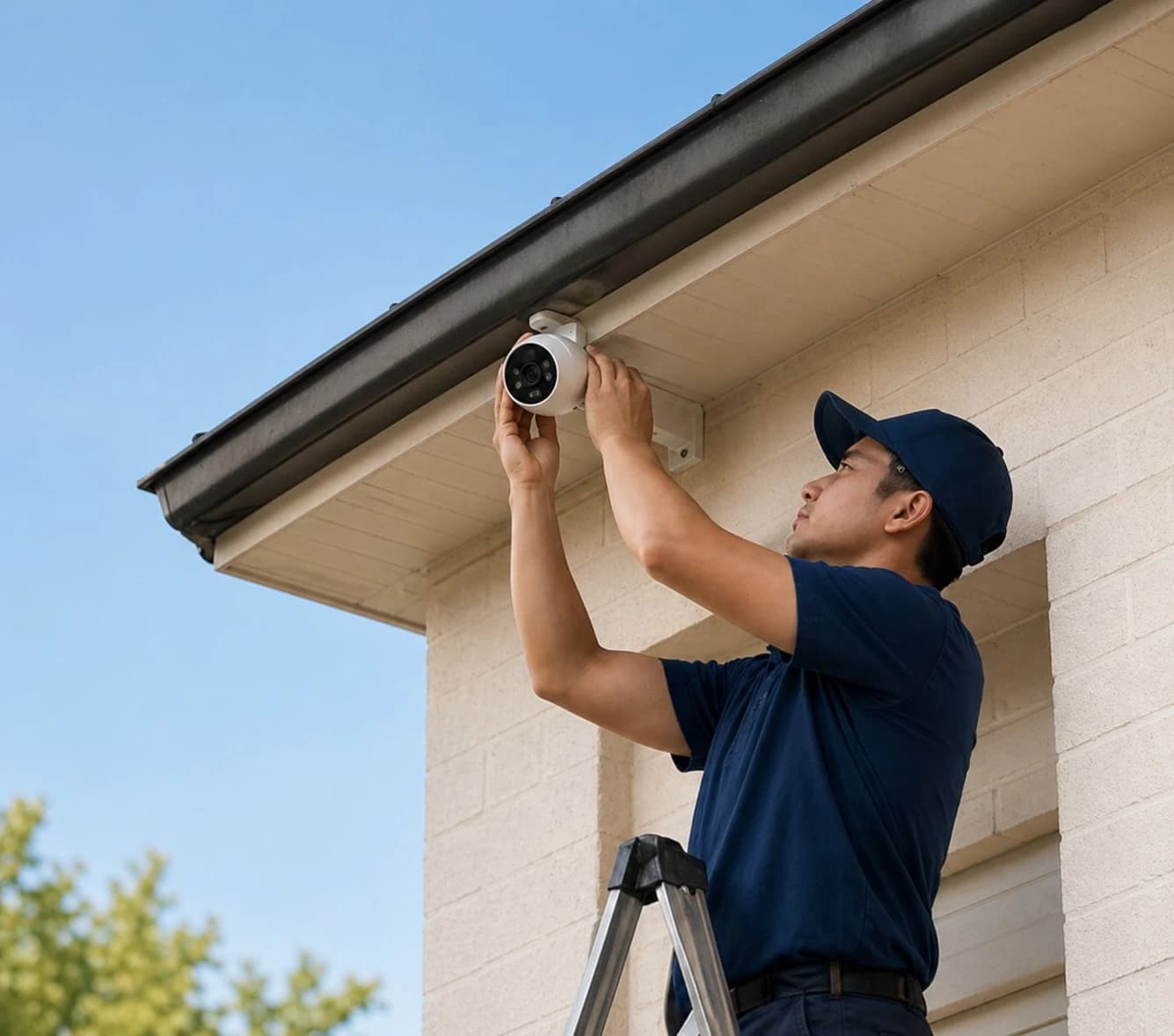
One of the most common DIY mistakes is mounting cameras too high. When cameras are installed excessively high, they capture only the tops of people's heads rather than identifiable facial images — which makes the footage far less useful as evidence.
A Security System Is More Than Just Cameras
Many homeowners believe purchasing several cameras completes the job. In reality, a professionally installed system includes high-definition cameras, a Network Video Recorder, local storage, smartphone remote viewing, professional cable installation, system configuration, mobile app setup and ongoing support. Every component contributes to the reliability of the system as a whole.
If you're still weighing up hardware options, Wired vs Wireless Security Cameras compares both approaches in detail.
Protect Your Home with the Right Security Solution
The best home security system isn't necessarily the biggest one. It's the one that's carefully planned, professionally installed, and designed to eliminate blind spots.
Whether you're building a new home, upgrading an older CCTV system, or installing security cameras for the first time, contact us today for a free consultation and let our team design a system that fits your home perfectly.
Frequently asked questions
Is four cameras enough?
For most standard three or four-bedroom homes, four cameras provide excellent coverage of the primary entry points: front door, driveway, backyard and side access. Larger homes may require additional cameras depending on the property's layout.
Where should security cameras be installed?
We generally recommend covering the front door, driveway, backyard and side access first, as these cover the main entry points and the most common blind spots. Additional locations such as garages, pools and secondary entrances can be added if required.
How high should security cameras be mounted?
Between 2.5 and 3 metres above ground for most residential installations. Mounting cameras higher than this typically captures only the tops of heads rather than identifiable faces.
Can I add more cameras later?
Yes. Our systems are fully expandable, allowing additional cameras or smart home devices to be integrated as your requirements change.
Can I install the cameras myself?
DIY wireless cameras may suit some situations. However, professionally installed wired systems provide greater reliability, cleaner installations and optimal camera positioning.
Tags
- Security Cameras
- Camera Placement
- CCTV
- Home Security
- Melbourne