

Smart Lighting & Sensor Automation for a Kew Residence
Smarter lighting designed around the way the home is used
For this Kew residence, Austrend Home delivered a customised smart lighting solution designed to make everyday lighting simpler, more intuitive and better integrated with the home's contemporary interior.
The brief
How the project started
Modern homes often contain multiple lighting circuits, feature lighting and different functional zones. While this provides flexibility, it can also result in walls crowded with conventional switches and a lighting system that requires constant manual control.
- Location
- Kew, Melbourne
- Project Type
- Residential Smart Home Upgrade
- Services
- Smart Lighting Control · Motion Sensor Automation · Custom Switch Integration
Our approach
How we shaped the solution
For this Kew home, the objective was to create a cleaner and more intuitive lighting experience without compromising the carefully considered interior design. Frequently used living spaces required convenient manual control, while transitional and short-use spaces such as the walk-in wardrobe were better suited to automation.
Rather than treating every room the same, the lighting controls were configured around how each space is actually used. Smart wall controls were installed throughout key areas of the home, while sensor-based automation was introduced in the walk-in wardrobe to allow the lighting to respond automatically when the space is occupied.
The result is a lighting system that requires less manual interaction while remaining visually discreet within the home's architectural finishes.
Included systems
Systems we installed
Smart Lighting Control Throughout the Home
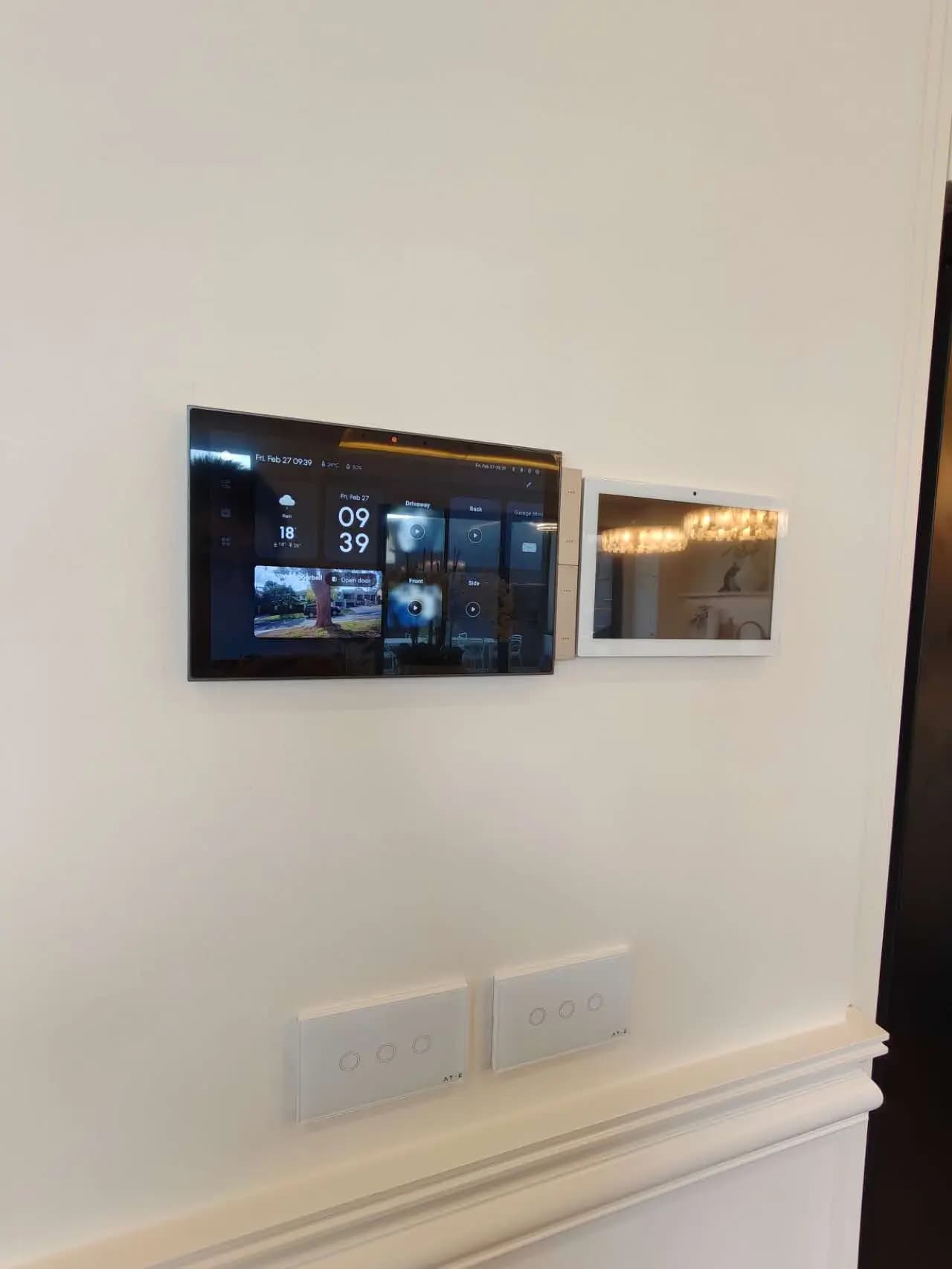
Smart touch controls were integrated into several areas of the residence, providing a streamlined way to manage multiple lighting circuits. Instead of relying on banks of traditional mechanical switches, compact smart control panels allow multiple lighting functions to be managed from a clean, minimal interface.
Lighting Controls Matched to the Interior
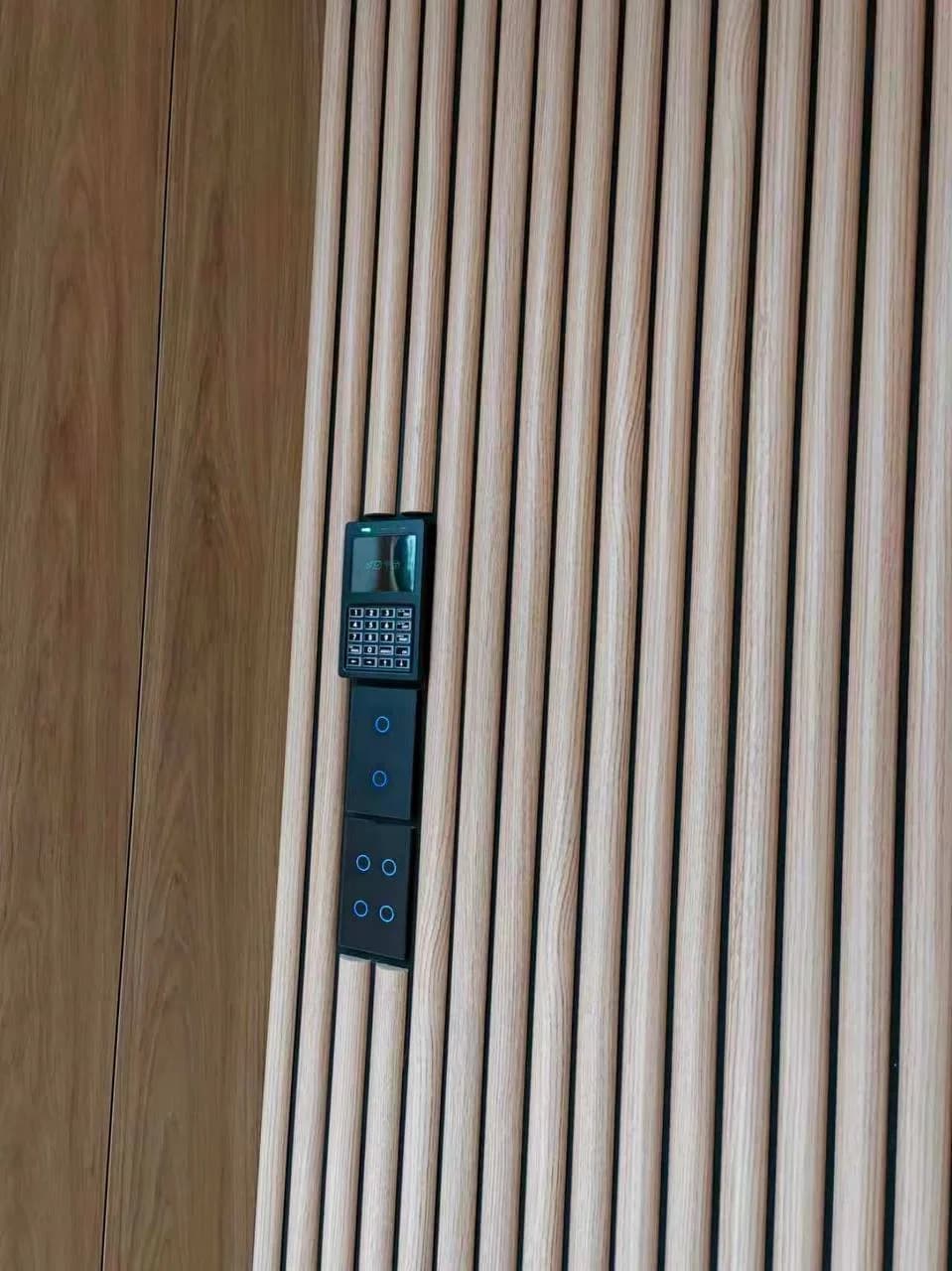
An important part of this project was ensuring the technology felt integrated into the home rather than added afterwards. Black control panels were selected for darker timber joinery, while white touch controls were used against pale walls and stone finishes.
Motion-Activated Walk-In Wardrobe Lighting
In the walk-in wardrobe, Austrend Home introduced sensor-based lighting automation. A discreet occupancy sensor detects when the space is being used and allows the lighting to operate automatically, removing the need to reach for a switch when entering or leaving the wardrobe.
For a space that is typically entered for short periods throughout the day, this type of automation provides noticeable everyday convenience while also helping avoid lights being left on unnecessarily.
Different Controls for Different Spaces
A successful smart home does not necessarily mean automating everything. For this project, Austrend Home combined manual smart controls with automatic sensor-based operation depending on the function of each space. Living and entertaining areas retain convenient touch control, while areas such as the wardrobe can respond automatically to occupancy.
Designed to Blend In
One of the strongest features of this installation is how little the technology draws attention to itself. The home's timber cabinetry, light stone surfaces and neutral walls remain the visual focus. The smart controls and sensors sit quietly within those finishes, providing functionality without disrupting the architecture.
Good home automation should not require a home to look 'high-tech'. In this Kew residence, the technology works in the background while the interior design remains front and centre.
The result
The completed system gives the homeowners a simpler and more responsive way to manage lighting throughout the property. Smart touch controls reduce visual clutter and make multiple lighting circuits easier to operate, while sensor automation in the walk-in wardrobe removes an everyday manual task entirely. Cleaner controls. Smarter automation. Less everyday interaction. A tailored lighting system that becomes part of the home rather than another piece of technology added to it.
Project gallery
Inside the project
Related services
Services behind this project
Smart Home Packages
Integrated smart home planning for Melbourne homes, renovations, and new builds, including security, lighting, locks, and network systems. Serving Balwyn, Toorak, Camberwell, Kew, South Yarra, Brighton, Bentleigh, St Kilda, and Greater Melbourne.
Services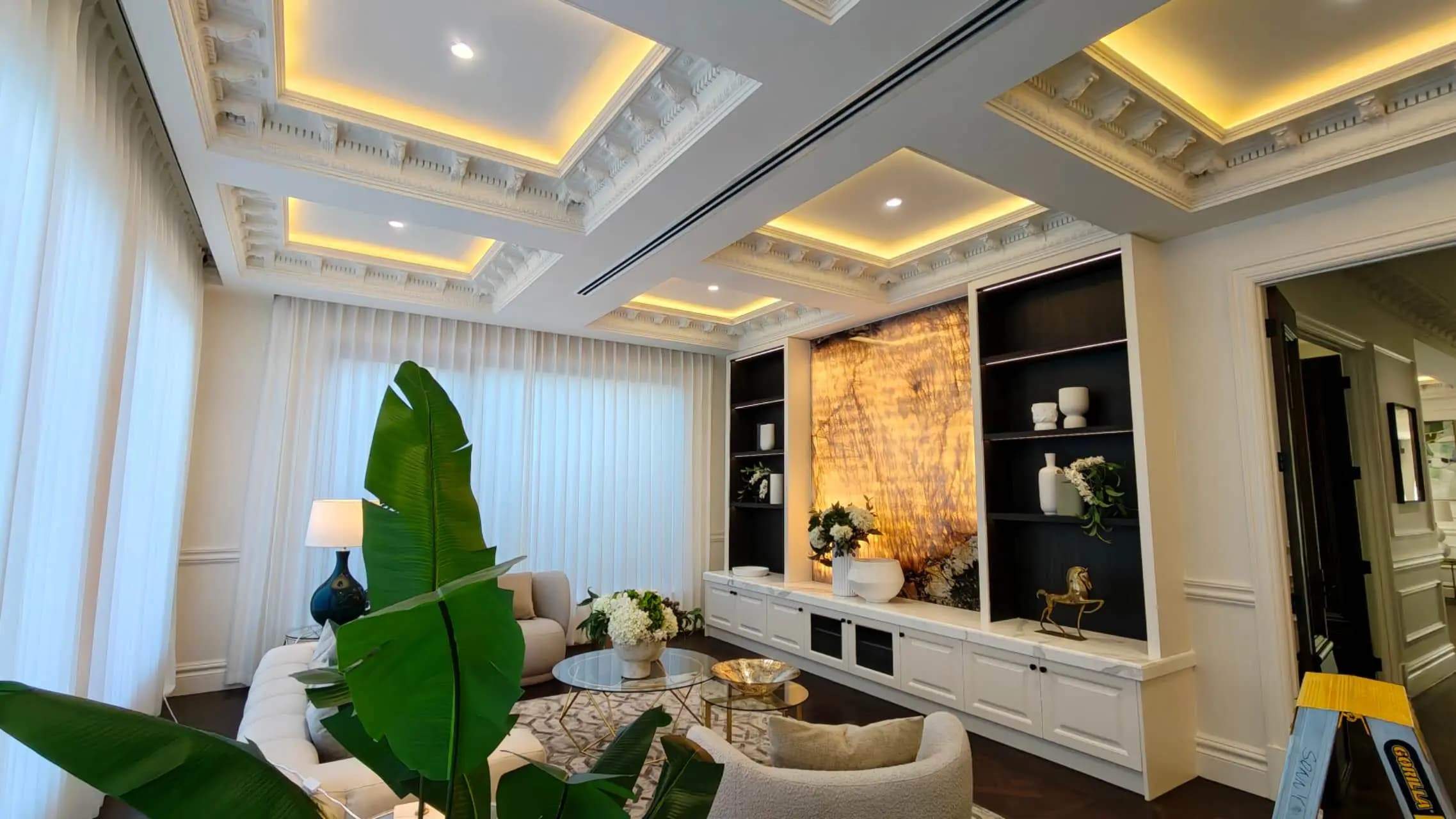
Smart Lighting
Smart lighting design and installation in Melbourne for homes, renovations, and premium smart-home projects. Serving Balwyn, Toorak, Camberwell, Kew, South Yarra, Brighton, Bentleigh, St Kilda, and Greater Melbourne.
ServicesProof in Practice
Planning something similar?
Tell us what you're building, upgrading, or protecting and we'll help shape the right smart-home or commercial solution.